PITS, MARKS AND TEXTURE LEFT BEHIND
Make the skin rebuild what it lost.
Scars respond best when treated early, before the skin settles. Resurfacing, microneedling and peels each do a different job; the consultation decides which, or which mix, suits your scars.
Free, about 40 minutes, in London, Birmingham or Manchester. A written plan and the price before you decide.
Does this sound like you?
Most people recognise themselves in two or three of these. Tick what you notice and see which pattern it points to, and what a practitioner would check.
TICK WHAT YOU NOTICE
WHAT HAVE YOU TRIED?
WHAT THIS TELLS YOU
Tick one or more and this fills in.
Acne scarring is usually one of 4 patterns: marks, not scars, pitted scars, rolling scars, raised scars. The ticks show which yours most resembles.
How we treat acne scarring
There is no single answer for acne scarring, which is why the consultation comes first. The practitioner looks at whether the scars are pitted, raised or flat marks and chooses from the options on the right, in the order that makes sense for your skin.
You will know your number, in writing, before you decide.
“Now two months into the programme, I’m already seeing visible results, which is incredibly encouraging.”
What happens at your consultation
- 1Whether the scars are pitted, raised or flat marks
- 2How much the colour has changed around them
- 3How much downtime you can take
- 4A written plan with the number of visits and the price. No obligation.
Where it usually comes from
- Collagen lost while a spot healed
- Picking or squeezing
- Deep or long-lasting inflammation
IN DEPTH · FOR THOSE WHO WANT THE WHY
Acne scarring, explained properly
The difference between a mark and a scar
A flat mark left after a spot is colour, not a scar: red or purple where blood vessels have widened, brown where the skin made extra pigment to protect itself. These fade with time and respond to the same approaches as other pigmentation.
A true scar is a change in the skin's structure. Ice-pick scars are narrow and deep. Boxcar scars are wider with sharp edges. Rolling scars are shallow dips that give the skin a wavy look. Raised scars happen when the skin makes too much collagen while healing. Most people with acne scarring have a mix, which is why no single treatment suits every scar.
Why time alone rarely fixes it
Marks fade because the skin renews. Scars do not, because the collagen beneath has already set in a new shape. The skin can be encouraged to remodel that collagen, but only by treatments that reach the depth where it sits, which is below where any cream can act.
Scarring is also easier to treat early. Older scars are firmer and the skin above them has thinned, so the earlier a settled scar is treated the fewer visits it tends to need.
How a plan is built at the consultation
The practitioner maps which types of scar you have and where, checks that the acne itself is calm, and looks at skin type, because darker skin types need gentler settings to avoid new pigmentation.
Treatments a consultation would discuss include RF microneedling and laser resurfacing to prompt the skin to rebuild collagen, medical peels for texture and colour, and PRP to support healing. A course of visits is usual, and the plan sets out how many and the price before you decide.
Educational information, not a diagnosis. Your practitioner examines your skin in person before anything is planned.
Questions people ask before booking
How much downtime is there?
It depends on the depth. Some settings mean a day or two of redness; deeper work means more. You will be told exactly what to expect before you decide.
Is the consultation really free?
Yes. About 40 minutes, in person, in London, Birmingham or Manchester. You leave with a written plan and the price. No obligation.
How much will it cost?
It depends on what your skin needs. Your figure is written into your plan at the free consultation, before you decide, and there are flexible instalment options with no interest or admin fees.
How many visits, and how long?
A standard course is three to six visits over six to ten weeks. If there is a date you are working to, count back ten weeks and tell us.
Does it hurt?
Most treatments feel like warmth, tingling or a quick sting rather than pain, and numbing cream is used where it helps. The practitioner tells you exactly what to expect for your treatment before you decide, and you can stop at any point.
How many visits will I need?
It depends on the treatment and on your skin. Many plans are three to six visits over six to ten weeks; some single treatments are one visit. Your written plan says the number before you pay for anything.
When will I see a difference, and how long does it last?
Some treatments show a change within days; those that work by building collagen take six to twelve weeks to show fully. How long results last depends on the treatment, your skin and how well it is protected from the sun. The practitioner gives you a realistic timeline rather than a promise.
What is the downtime?
Anything from none to a few days of redness or peeling, depending on the treatment. Each treatment page says what to expect, and the plan is timed around your diary where it matters, for example before an event.
Is it safe for darker skin?
Darker skin has more active pigment cells and marks more easily, so settings and treatments are chosen for your skin type and some are avoided. Tell us your skin type at the consultation and the plan is built around it.
Who should not have it?
Pregnancy, some medications, active infections and certain medical conditions rule some treatments out. The consultation goes through this with you, and if a treatment is not suitable the practitioner says so and suggests what will work instead.
Conditions in this group
Often looked at together
Real results for acne scarring
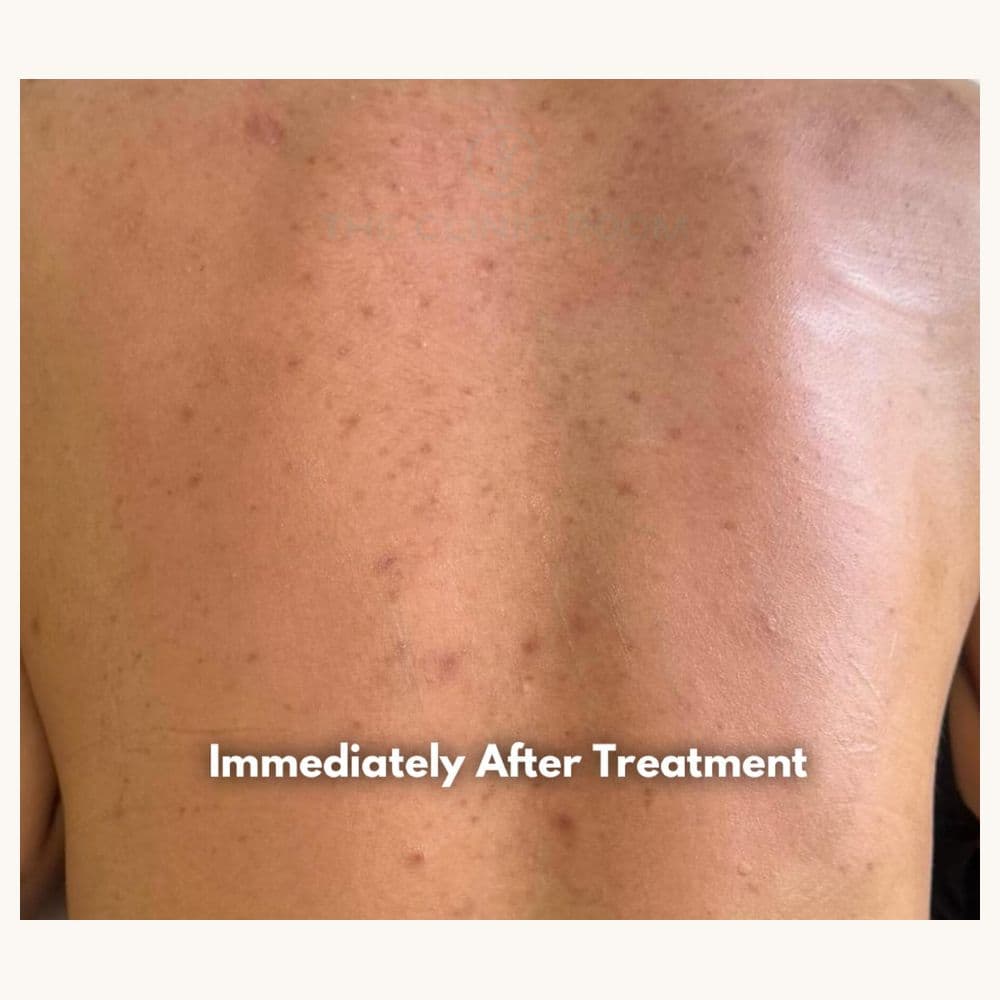
See every resultBack pigmentation and acne scarring — straight after treatment 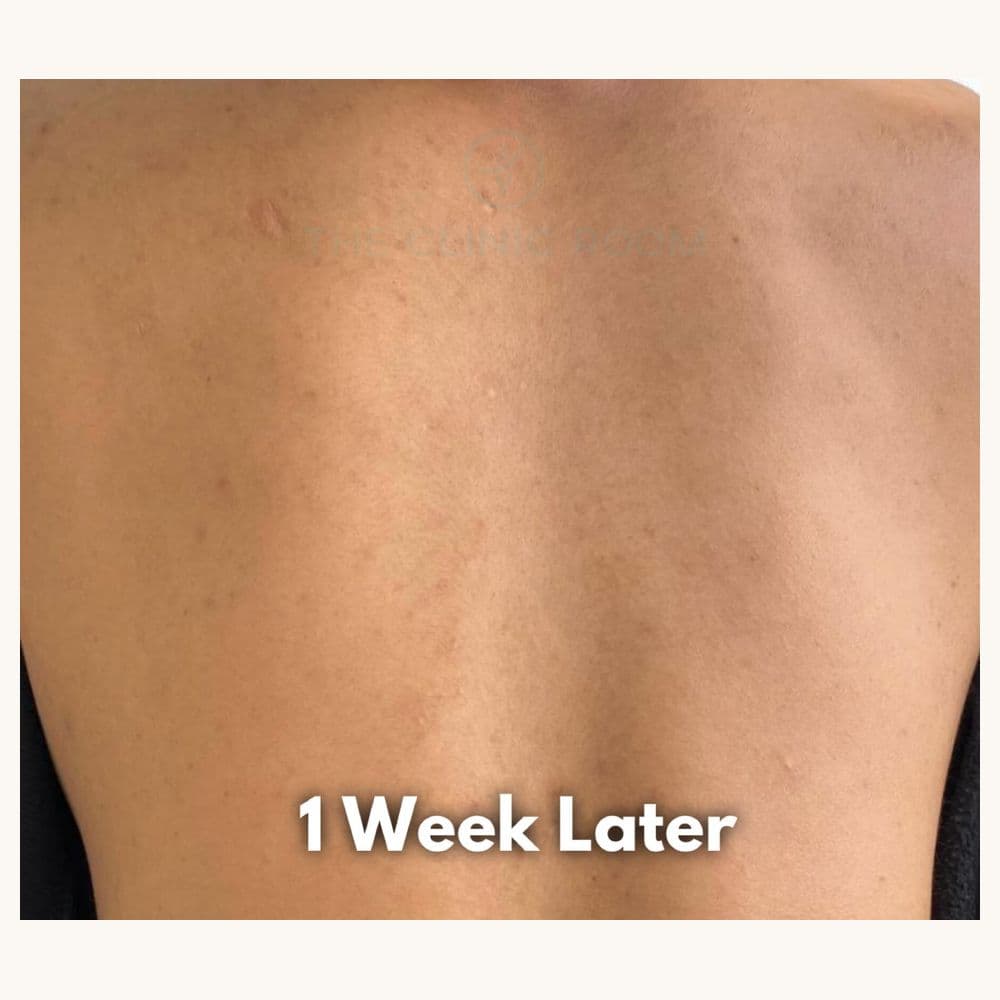
The same back one week later, after one session 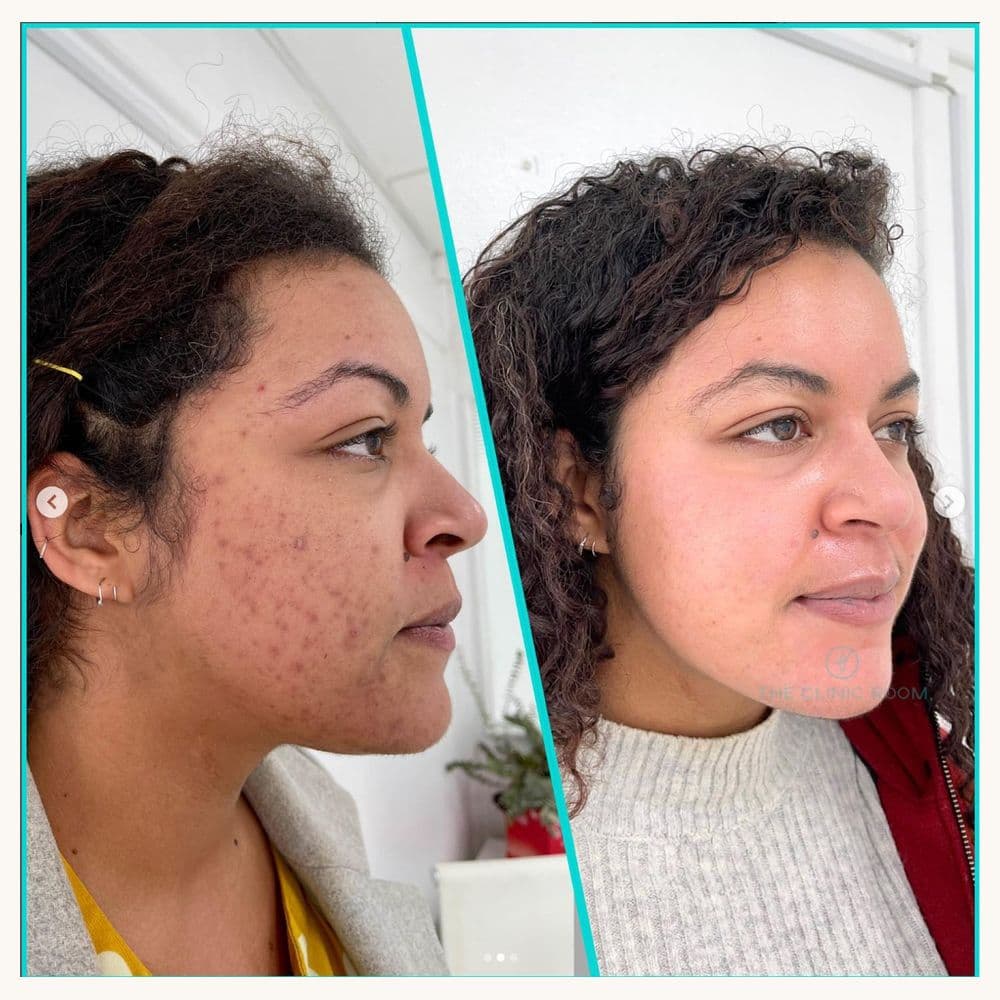
Active acne and acne scars — 8 weeks on the Miracle Skin Programme 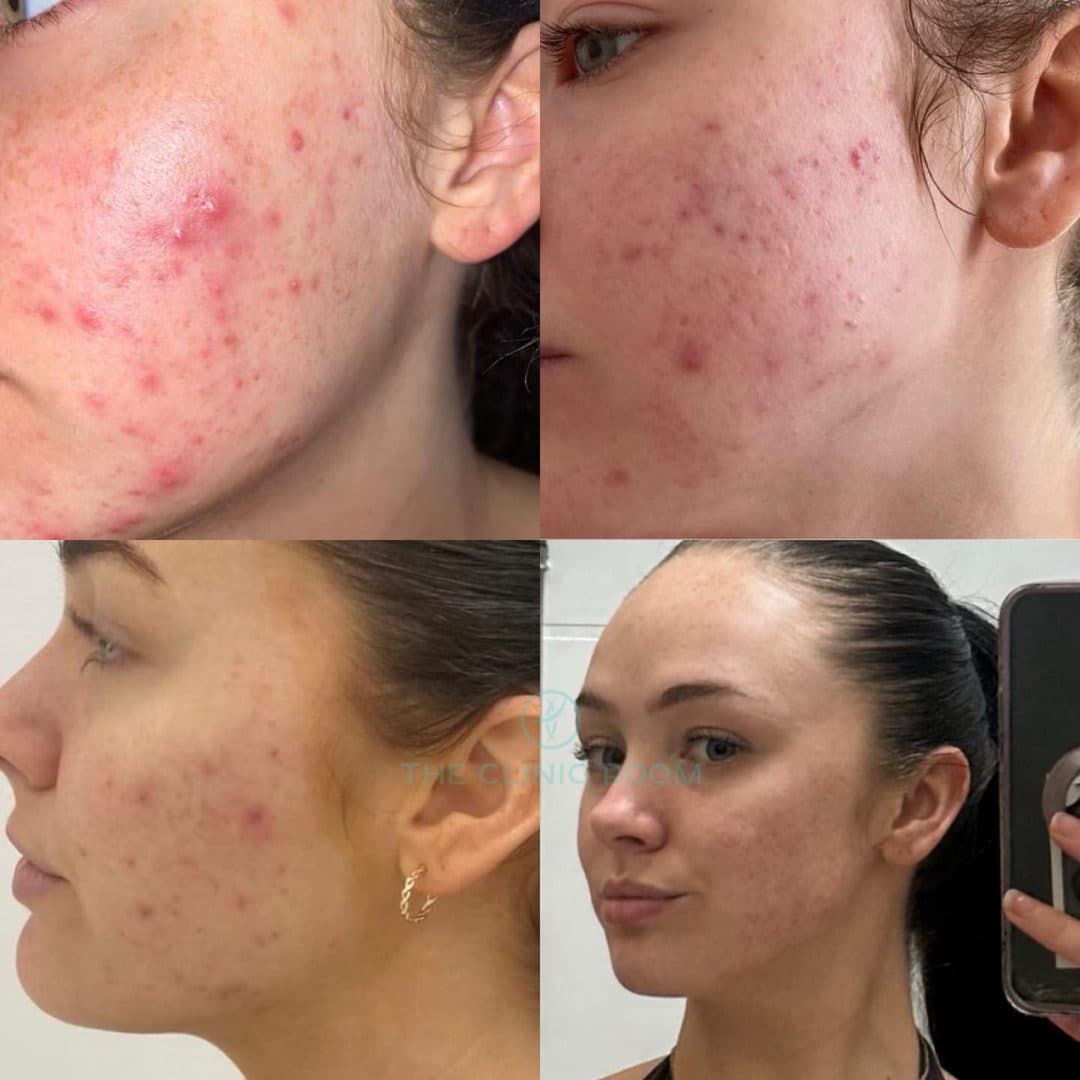
Active acne and scarring — day 1 to the third session
Each caption says what was done; some patients had a combined plan. Results vary from person to person. Every photograph is a Clinic Room patient who agreed to share it, and your consultation is where we say what is realistic for you.
Our clinics
London
1st Floor, 50 Essex Street, Strand
London WC2R 3JFBirmingham
214C Hagley Road
Birmingham B16 9PHManchester
Cheetham Hill Shopping Centre, 40 Bury Old Road
Manchester M8 5DP
Talk to a practitioner about this.
Book directly, or ask for a call back. No pressure, no obligation.
Choose your clinic and a real appointment time below, and confirm in about a minute. A free consultation takes about 40 minutes, in person. You leave with a written plan and the price, with no obligation.
Real appointment times, confirmed instantly. Not showing? Open the booking page in a new tab.