BACK, CHEST, ARMS AND LEGS
Marks on the body respond too.
Backs, chests, arms and legs scar and mark in their own ways. The same programmes are adapted for larger areas and thicker skin.
Free, about 40 minutes, in London, Birmingham or Manchester. A written plan and the price before you decide.
Does this sound like you?
Most people recognise themselves in two or three of these. Tick what you notice and see which pattern it points to, and what a practitioner would check.
TICK WHAT YOU NOTICE
WHAT HAVE YOU TRIED?
WHAT THIS TELLS YOU
Tick one or more and this fills in.
Body pigmentation and scarring is usually one of 4 patterns: marks from spots or ingrown hairs, friction pigmentation, sun pigmentation, scars. The ticks show which yours most resembles.
How we treat body pigmentation and scarring
Most people are offered the Miracle Skin Programme first. A medical peel lifts the colour out, treatments then calm the cells that make it, and protection keeps it away. Pigment sits at several depths, so a programme is a short series of visits, each lifting one layer.
- 1A written plan built at your consultation
- 2A short series of visits, three to six over six to ten weeks
- 3Combinations of peels, laser resurfacing, RF microneedling and skin boosters chosen for your skin
- 4Protection and home care between visits
A standard course is three to six visits over six to ten weeks. You will know your number, in writing, before you decide.
“Now two months into the programme, I’m already seeing visible results, which is incredibly encouraging.”
What happens at your consultation
- 1Area and extent
- 2Whether colour or texture is the main concern
- 3Clothing and sun exposure after treatment
- 4A written plan with the number of visits and the price. No obligation.
Where it usually comes from
- Acne on the back and chest
- Sun
- Friction
- Old injuries
IN DEPTH · FOR THOSE WHO WANT THE WHY
Body pigmentation and scarring, explained properly
Pigmentation and scarring on the body
The back, chest, shoulders, arms and legs pick up pigmentation for the same reasons the face does, with two extra causes: friction from clothing and straps, and the marks left behind by body acne, folliculitis and ingrown hairs. Body skin is thicker and renews more slowly than facial skin, so marks take longer to fade on their own and courses tend to be longer.
What is realistic
Flat marks respond well to treatment that lifts pigment and renews the surface. Raised or pitted scars need the skin to remodel its collagen, which takes a course of visits and is slower on the body than on the face. Sun protection on the treated area is essential, and the darker months are the easiest time to treat.
How a plan is built at the consultation
The practitioner looks at the area, at whether the marks are colour or structure, and at what is causing them, so the cause is dealt with as well as the mark. Treatments a consultation would discuss include medical peels, laser resurfacing and RF microneedling, with the number of visits and the price in writing before you decide.
Educational information, not a diagnosis. Your practitioner examines your skin in person before anything is planned.
Questions people ask before booking
Is the consultation really free?
Yes. About 40 minutes, in person, in London, Birmingham or Manchester. You leave with a written plan and the price. No obligation.
How much will it cost?
It depends on what your skin needs. Your figure is written into your plan at the free consultation, before you decide, and there are flexible instalment options with no interest or admin fees.
How many visits, and how long?
A standard course is three to six visits over six to ten weeks. If there is a date you are working to, count back ten weeks and tell us.
Does it hurt?
Most treatments feel like warmth, tingling or a quick sting rather than pain, and numbing cream is used where it helps. The practitioner tells you exactly what to expect for your treatment before you decide, and you can stop at any point.
How many visits will I need?
It depends on the treatment and on your skin. Many plans are three to six visits over six to ten weeks; some single treatments are one visit. Your written plan says the number before you pay for anything.
When will I see a difference, and how long does it last?
Some treatments show a change within days; those that work by building collagen take six to twelve weeks to show fully. How long results last depends on the treatment, your skin and how well it is protected from the sun. The practitioner gives you a realistic timeline rather than a promise.
What is the downtime?
Anything from none to a few days of redness or peeling, depending on the treatment. Each treatment page says what to expect, and the plan is timed around your diary where it matters, for example before an event.
Is it safe for darker skin?
Darker skin has more active pigment cells and marks more easily, so settings and treatments are chosen for your skin type and some are avoided. Tell us your skin type at the consultation and the plan is built around it.
Who should not have it?
Pregnancy, some medications, active infections and certain medical conditions rule some treatments out. The consultation goes through this with you, and if a treatment is not suitable the practitioner says so and suggests what will work instead.
Conditions in this group
Often looked at together
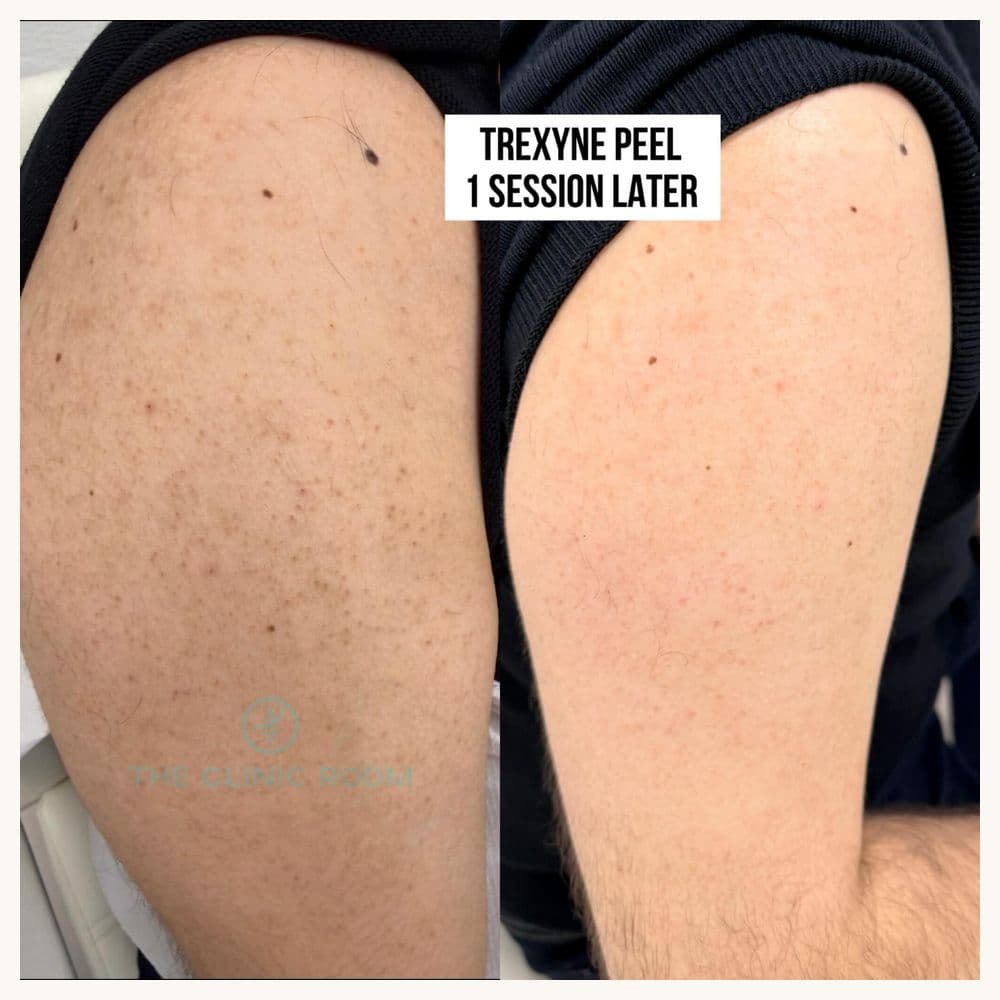
Real results for body pigmentation and scarring
See every result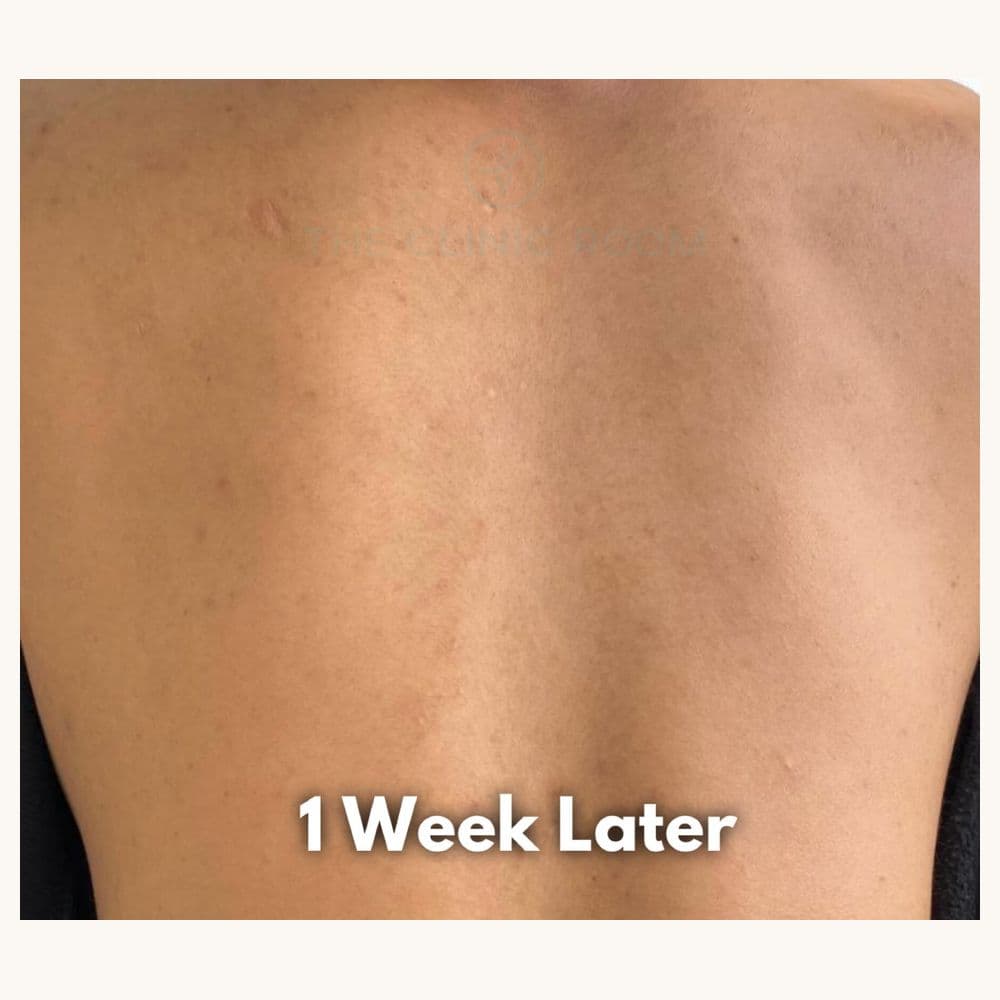
The same back one week later, after one session 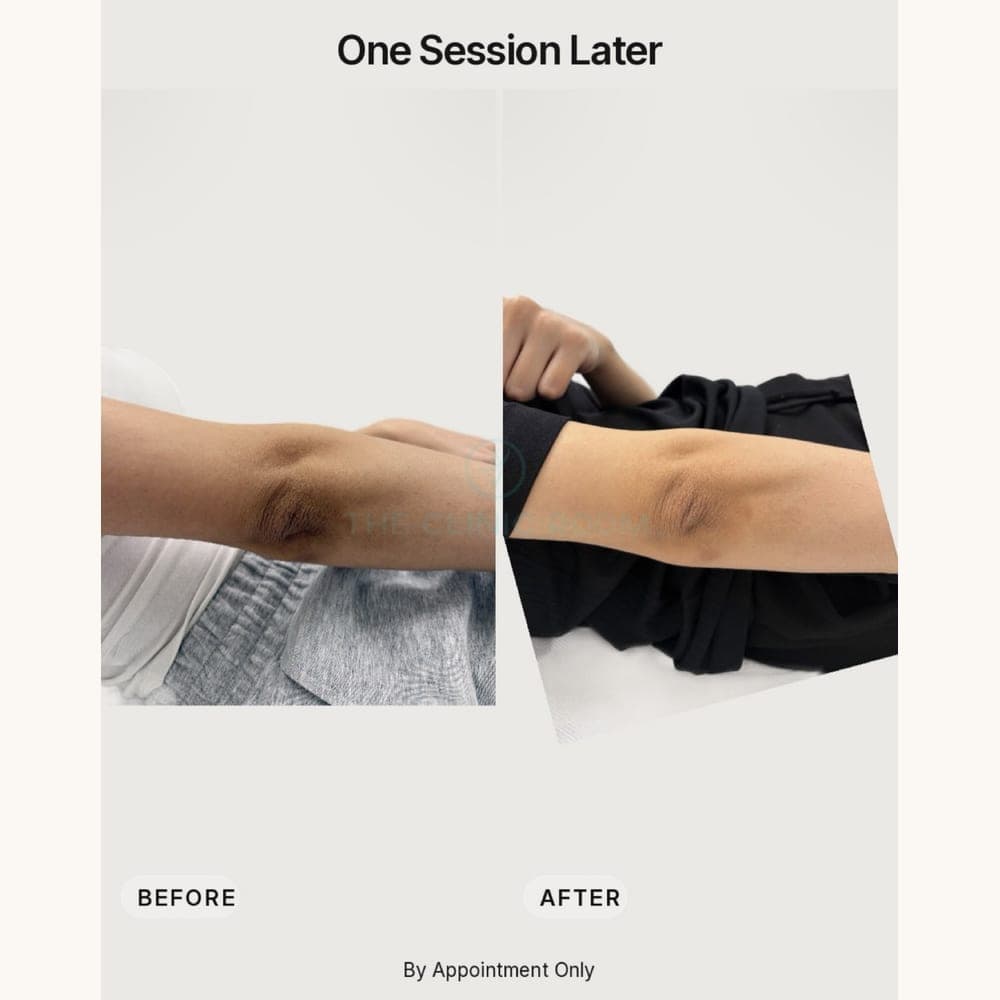
Elbow pigmentation — one Trexyne peel session, three weeks later 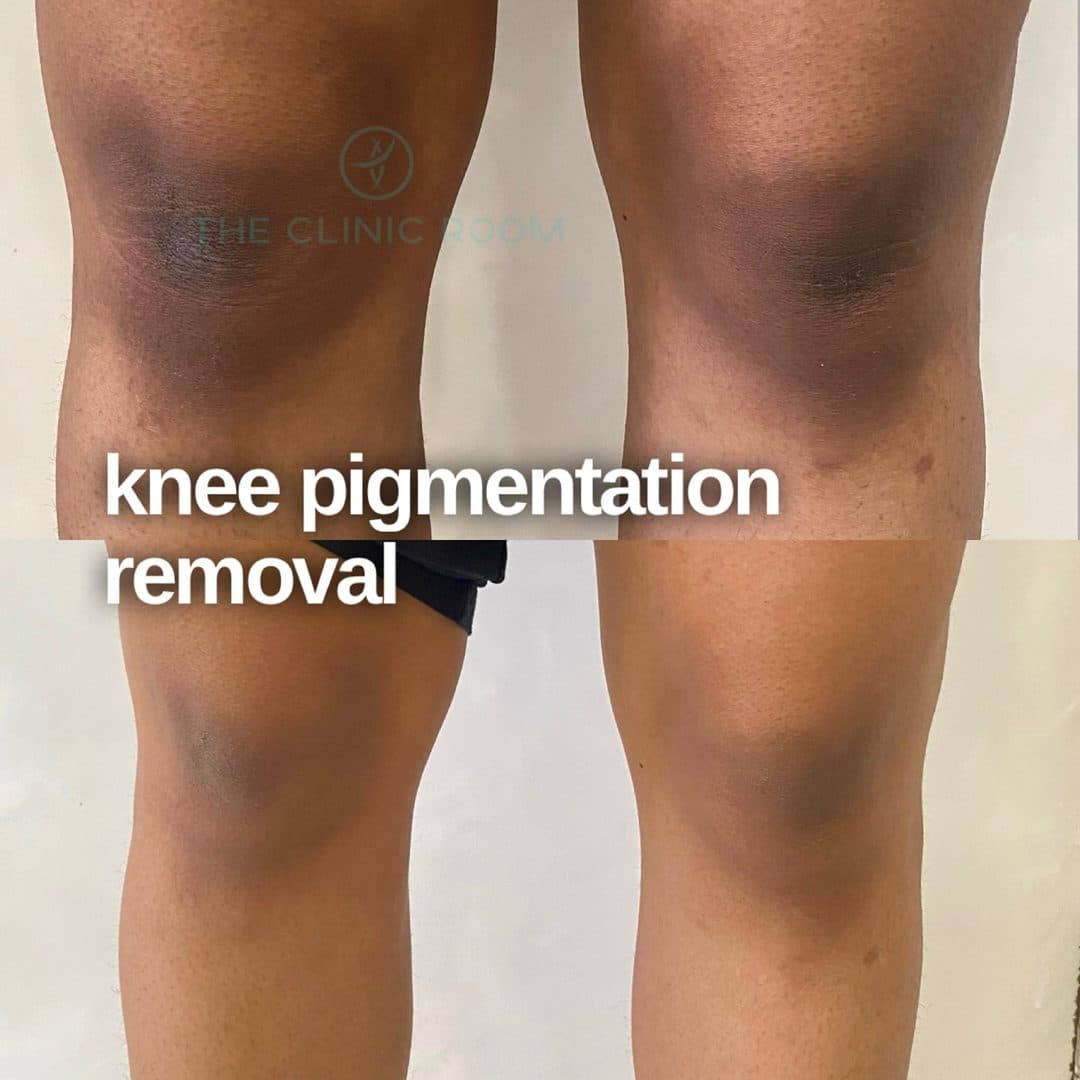
Knee pigmentation removal Arm — Trexyne peel, one session later
Each caption says what was done; some patients had a combined plan. Results vary from person to person. Every photograph is a Clinic Room patient who agreed to share it, and your consultation is where we say what is realistic for you.
Our clinics
London
1st Floor, 50 Essex Street, Strand
London WC2R 3JFBirmingham
214C Hagley Road
Birmingham B16 9PHManchester
Cheetham Hill Shopping Centre, 40 Bury Old Road
Manchester M8 5DP
Talk to a practitioner about this.
Book directly, or ask for a call back. No pressure, no obligation.
Choose your clinic and a real appointment time below, and confirm in about a minute. A free consultation takes about 40 minutes, in person. You leave with a written plan and the price, with no obligation.
Real appointment times, confirmed instantly. Not showing? Open the booking page in a new tab.