SKIN · CONDITION
Dry Skin
Dry skin, also known as xerosis, is a common skin condition characterized by a lack of moisture in the skin. It can lead to itching, flaking, cracking, and even bleeding. Dry skin can occur on any part of the body, but it is most commonly found on the face, hands, and legs.
Free, about 40 minutes, in London, Birmingham or Manchester. A written plan and the price before you decide.
Why do I have dry skin?
There are several factors that can contribute to dry skin, including genetics, age, weather, and certain medical conditions. People with eczema, psoriasis, or diabetes are more likely to suffer from dry skin. Also, as we age, our skin naturally becomes thinner and loses its ability to retain moisture. Cold, dry weather can also exacerbate dry skin, as can prolonged exposure to water, such as in the case of frequent handwashing or showering.
How Dry Skin can be cured?
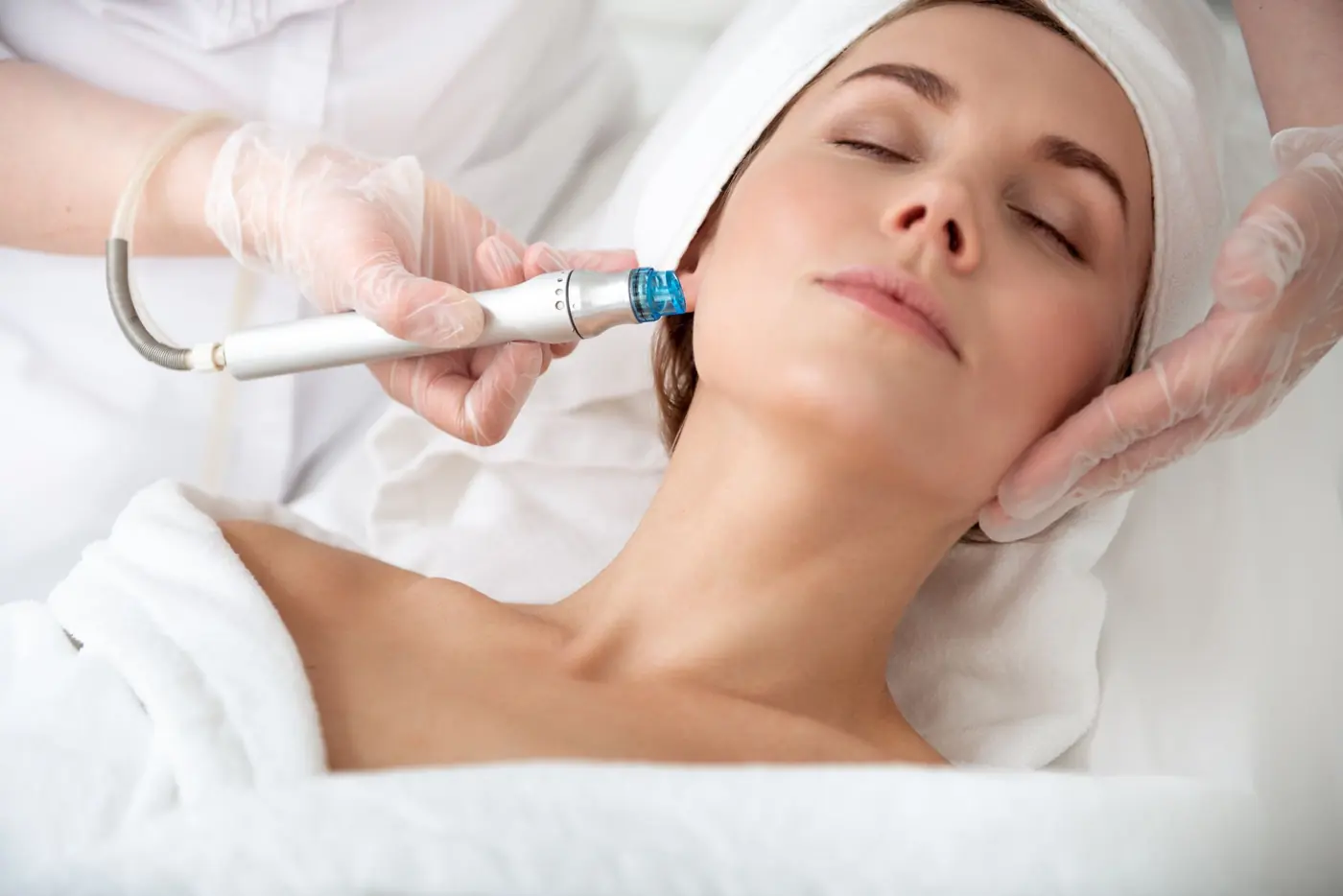
While there are several over-the-counter moisturizers and lotions available to help alleviate dry skin, some people may require more intensive treatment. The Clinic Room offers a range of non-surgical treatments that can help to hydrate and rejuvenate the skin. Laser skin resurfacing is a non-invasive treatment that uses laser energy to stimulate collagen production and can help to improve the appearance of fine lines and wrinkles. Chemical peels are a treatment that uses a chemical solution to remove the top layer of skin, revealing new, smoother skin underneath. Hydrafacials are a non-invasive treatment that uses a combination of cleansing, exfoliation, and hydration to improve the appearance of the skin. In addition, The Clinic Room also offers medical-grade skin care products that promote skin renewal and hydration. These products are specially formulated to provide intense hydration to dry, dehydrated skin and can be used in conjunction with other treatments. If you're suffering from dry skin, The Clinic Room can help you achieve a healthier, more hydrated, and youthful-looking skin. With their range of non-surgical treatments and medical-grade skin care products, they can help you achieve the results you desire. So, whether you're dealing with dry skin on your face, hands, or legs, The Clinic Room has the solution to help you achieve a more hydrated and youthful appearance.
Written by the clinic. Educational, not a diagnosis: your practitioner examines you in person before anything is planned.
Treatments a consultation would discuss
Which of these, and in what order, is decided by the practitioner after examining you. Your own figure is written into your plan.
Other skin conditions
Questions people ask before booking
Is the consultation really free?
Yes. About 40 minutes, in person, in London, Birmingham or Manchester. You leave with a written plan and the price. No obligation.
How much will it cost?
It depends on what your skin needs. Your figure is written into your plan at the free consultation, before you decide, and there are flexible instalment options with no interest or admin fees.
How many visits, and how long?
A standard course is three to six visits over six to ten weeks. If there is a date you are working to, count back ten weeks and tell us.
Does it hurt?
Most treatments feel like warmth, tingling or a quick sting rather than pain, and numbing cream is used where it helps. The practitioner tells you exactly what to expect for your treatment before you decide, and you can stop at any point.
How many visits will I need?
It depends on the treatment and on your skin. Many plans are three to six visits over six to ten weeks; some single treatments are one visit. Your written plan says the number before you pay for anything.
When will I see a difference, and how long does it last?
Some treatments show a change within days; those that work by building collagen take six to twelve weeks to show fully. How long results last depends on the treatment, your skin and how well it is protected from the sun. The practitioner gives you a realistic timeline rather than a promise.
What is the downtime?
Anything from none to a few days of redness or peeling, depending on the treatment. Each treatment page says what to expect, and the plan is timed around your diary where it matters, for example before an event.
Is it safe for darker skin?
Darker skin has more active pigment cells and marks more easily, so settings and treatments are chosen for your skin type and some are avoided. Tell us your skin type at the consultation and the plan is built around it.
Who should not have it?
Pregnancy, some medications, active infections and certain medical conditions rule some treatments out. The consultation goes through this with you, and if a treatment is not suitable the practitioner says so and suggests what will work instead.
Can I combine treatments?
Often, and the programmes are built that way. The order matters: active acne is calmed before scarring is treated, for example. The practitioner sets the sequence.
Real results for skin texture
See every result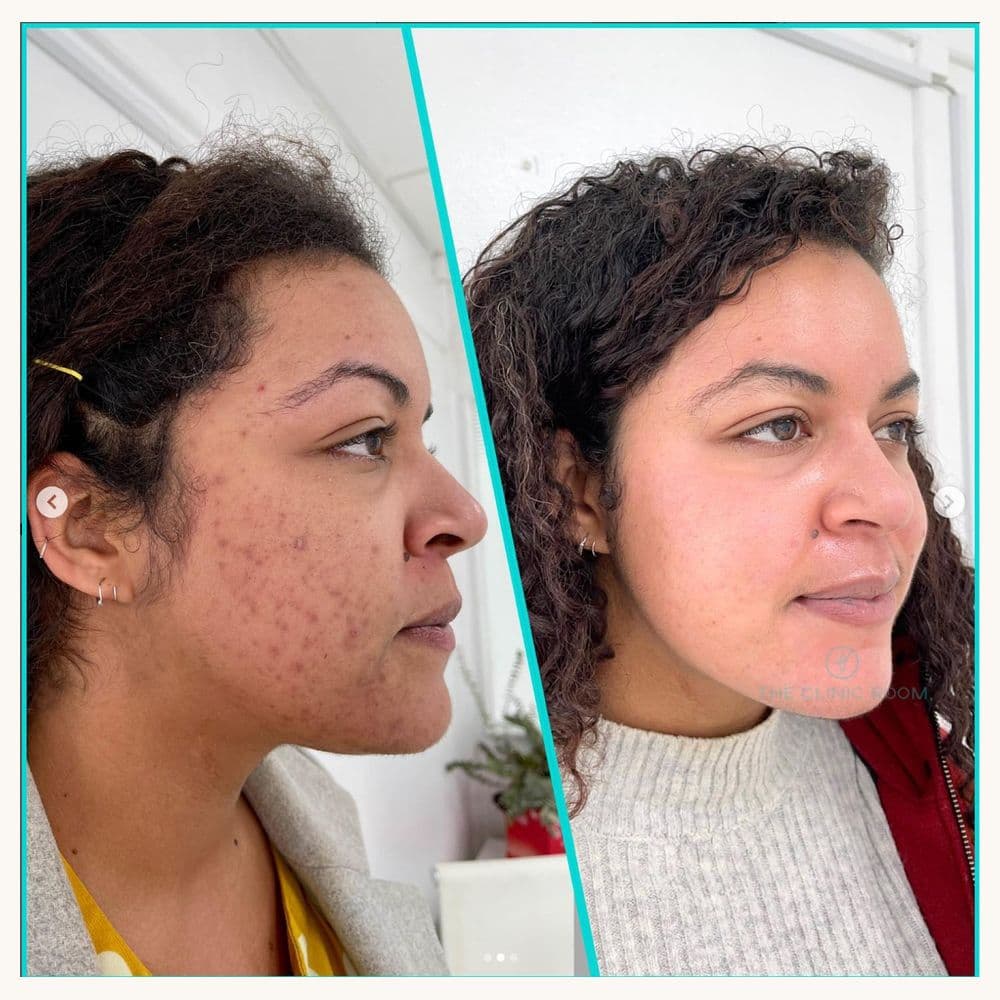
Active acne and acne scars — 8 weeks on the Miracle Skin Programme 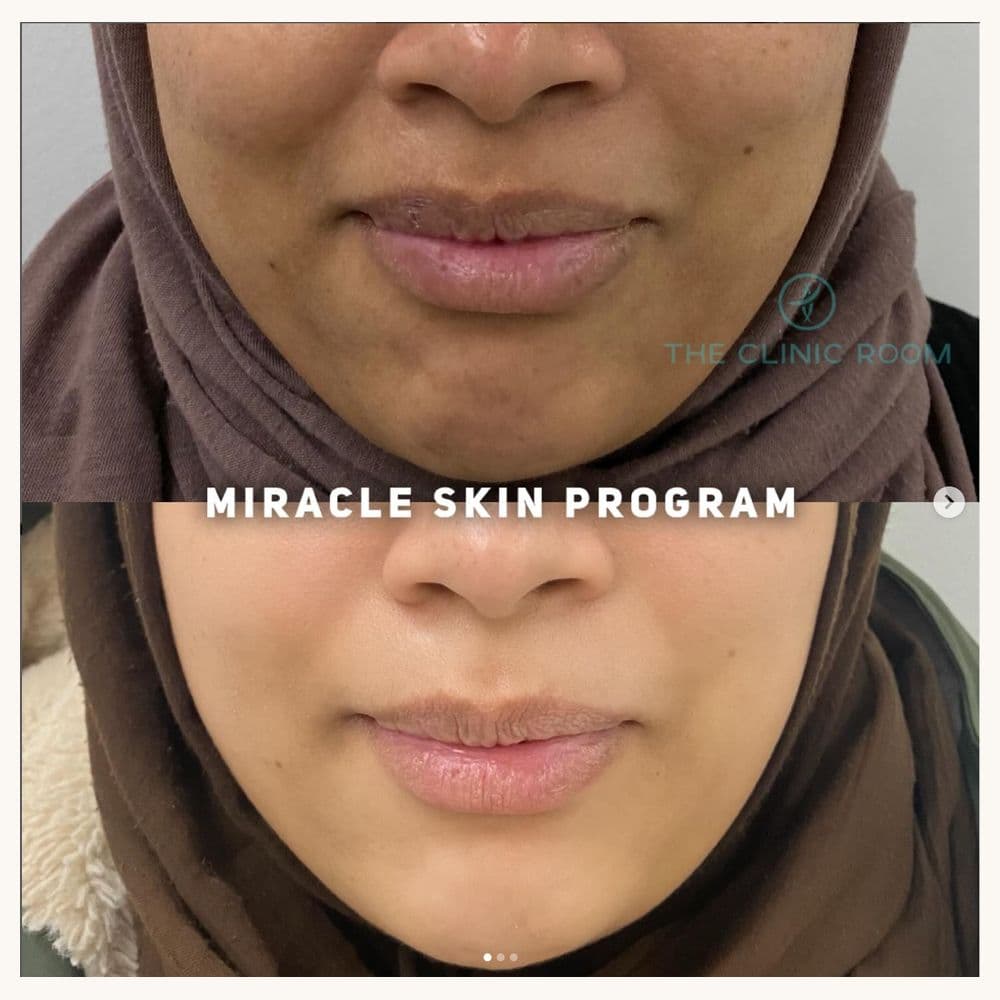
Dull, patchy skin from sun and the wrong products — 6 weeks 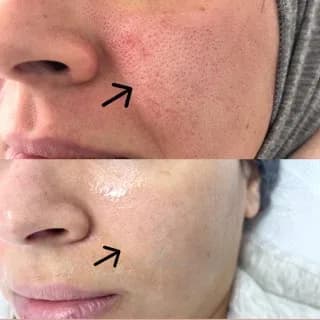
Acne — before and after 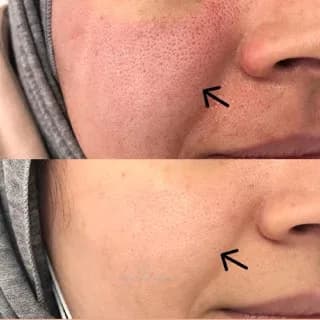
Acne — before and after
Each caption says what was done; some patients had a combined plan. Results vary from person to person. Every photograph is a Clinic Room patient who agreed to share it, and your consultation is where we say what is realistic for you.
Talk to a practitioner about dry skin.
Book directly, or ask for a call back. No pressure, no obligation.
Choose your clinic and a real appointment time below, and confirm in about a minute. A free consultation takes about 40 minutes, in person. You leave with a written plan and the price, with no obligation.
Real appointment times, confirmed instantly. Not showing? Open the booking page in a new tab.